The First Canopy Cohort
The inaugural Canopy cohort: 6,500+ applications, 500 teams, five weeks at Fort Mason and online
✽
| Check size | Up to $250K for 4–7% equity |
| Credits | $50K for all; up to $500K for top teams |
| Announced by | Stavan Patel, March 27, 2026 |
| Predecessor | Artifact (Jan–Feb 2026) |
On March 27, 2026, Stavan Patel, Creative Director and Partner at Founders, Inc., posted on LinkedIn announcing a new program called Canopy — five weeks, 500 founders, three tracks spanning software, hardware, and media.5 By the time the application window closed on April 10, the program had received over 6,500 applications for those 500 spots: 100 teams to build on-site at the firm's Fort Mason campus in San Francisco and 400 teams joining online from anywhere in the world.71 The acceptance rate fell below 8%.7 It was the first time Founders, Inc. had opened any program beyond its physical walls, and the largest cohort in the organization's history.51
Canopy did not materialize overnight. It was the fifth iteration of Founders, Inc.'s cohort programming, each version larger and more structured than the last.
Ship It, the first formal program, brought roughly 60 builders to Fort Mason for a four-week sprint from February 24 to March 21, 2025.1314 Off Season followed in the summer of 2025 — six weeks, 48 student and recent-graduate teams.1516 Blueprint ran in the fall with 50 hardware builders for 38 days.1920 Then Artifact, from January 12 to February 13, 2026, accepted 200 founders for five in-person weeks and ended with a festival that drew roughly 4,000 attendees.1718
Each program taught the team something about running structured sprints at scale. Ship It proved the weekly Ship-it cadence could push 60 teams to ship real product.13 Off Season showed that students with half-formed ideas could build serious prototypes in six weeks.15 Blueprint demonstrated that hardware teams — which need CNC mills and soldering stations, not just laptops — could produce working robots in a five-week window.20 Artifact tested what happened when you doubled the founder count to 200, and the answer was a 120-team demo floor that forced Fort Mason's capacity.18
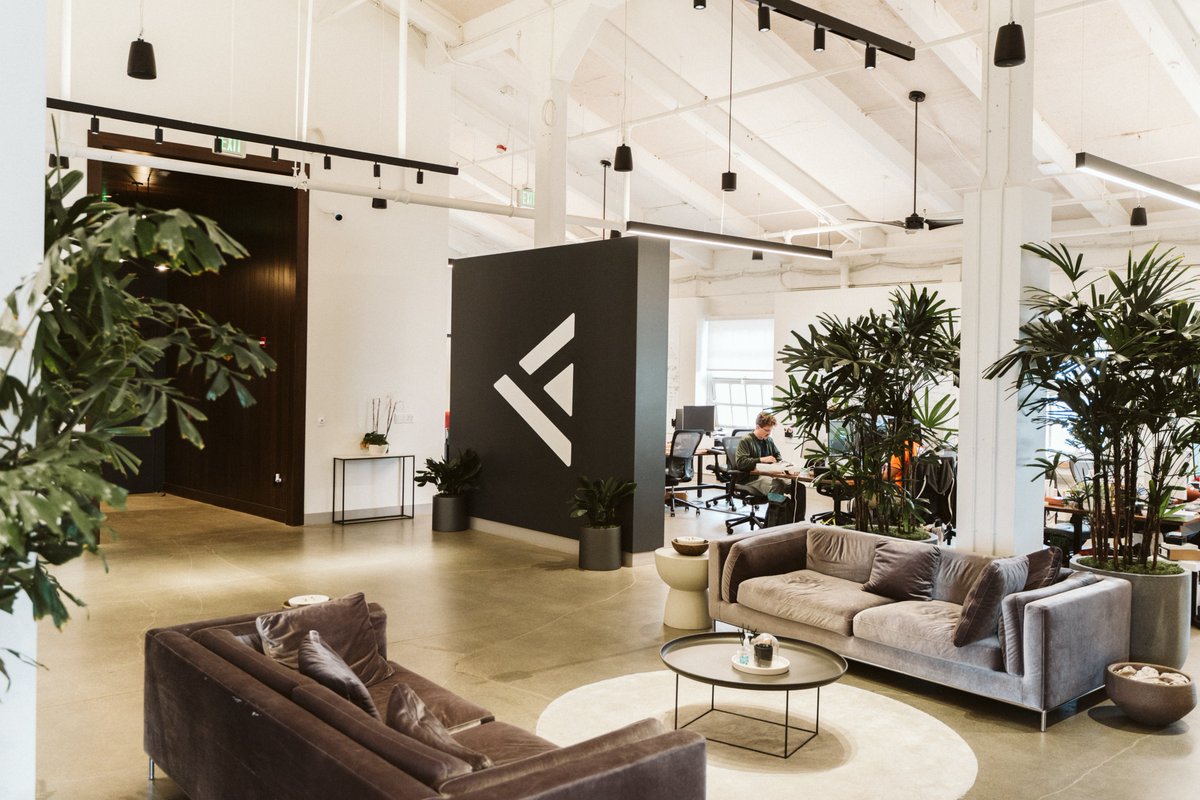
By March 2026, Hubert Thieblot, General Partner at Founders, Inc., reported that the firm had funded 55 startups in the preceding year, produced its first unicorn, doubled the campus footprint, quadrupled deployed capital, and brought over 1,000 founders to San Francisco through its programs.12 All of that happened in person. The question was whether the model could extend beyond the building.
Patel's March 27 LinkedIn post laid out the format: five weeks, April 15 through May 22, with sessions from founders who had built companies valued at $1 billion or more, $50,000 in credits for every participant, and up to $250,000 in funding for top teams.5 The three tracks — software (agents, apps, tools, platforms), hardware (robots, drones, wearables, machines), and media (channels, streams, studios, creator-led brands) — matched the domains Founders, Inc. already invested in.13 Applications closed April 4, with late applications accepted until April 10.21
On April 10, Founders, Inc. posted on LinkedIn that it was looking to invest $3,000,000 in the next 60 days and that applications closed that night.6 On April 2, the f.inc X account had posted "reviewing canopy apps rn. 100 hours left to apply" alongside a photo of the team's review screens.10
The Canopy page on f.inc's website did not open with the usual startup pitch. Instead it told three stories: a teenager in Seoul who taught herself to build apps without writing code and had 40,000 users, a man in a Phoenix garage who had been 3D-printing the same drone chassis for eleven weeks because he could not get the weight distribution right, and a woman in London who quit her job to build a production studio from her apartment with a camera, a laptop, and six months.1 The word that connected them, the page said, was "obsession."1
The application itself was short — five to six questions, no pitch deck, no demo video.3 Founders, Inc. has never required a pitch deck at any stage of its process; Thieblot has described the firm's position as: "We absolutely hate pitch decks. We never like making them as founders because building a company is about doing, not making a polished presentation."12
Instead, the firm evaluated applicants on six traits listed publicly on its website: prolific building history, technical curiosity, founder-market fit, a unique point of view, ambition, and a generous attitude.3 The about page also stated that ideal applicants had "previously built some cool projects & got some traction," had "a clear plan for what you'll do with the capital," and had "made moves to build motion (e.g. gone viral, have a crazy waitlist, have paying customers, etc.)."3
Over 6,500 teams applied.7 With 500 spots available, the acceptance rate worked out to under 8%.7 One accepted team, Obside — a French startup building an AI-powered platform for automated stock trading, founded by Thibaud Sultan and Florent Poux and backed by a 500,000-euro raise in late 2025 — announced their acceptance on Reddit's r/founder, writing that they had been "selected out of 6500+ applications."72627
Accepted in-person participants confirmed their spots by April 13 at 11:59 PM PT; online participants by April 14.119 Every cofounder on a team had to individually apply and confirm separately.8
The LinkedIn comments on Founders, Inc.'s $3M investment announcement offer a partial picture of who was accepted. Kai Shuro, listed at Founders, Inc., commented "I got in LFG!!!!!!"6 Mandar Wagh of OPENEYES wrote "I got in ! LFG."6 Alexis Sanz Fargeas, who listed himself as building a stealth AI startup and had 15,000 LinkedIn followers, commented "LFG!!"6 Emil Shirokikh of Belto World, with 20,000 followers, responded "Deal."6
The cohort drew from a wide geographic spread. At the kickoff on April 15, when the speaker asked the in-person founders where they had come from, the answers ranged from San Jose to South Korea.22 This mirrored the pattern of earlier programs: Ship It had builders "from around the world" fly to San Francisco13; Off Season drew 48 teams that included autonomous vineyard robots from one continent and AI orthodontists from another.16
The difference with Canopy was scale. Where Artifact had accepted 200 founders (roughly 100 teams) in person, Canopy accepted 100 in-person teams and added 400 more online — the first time the firm had extended its program beyond San Francisco.15 The online cohort opened Founders, Inc.'s programs to "anyone with an internet connection, anywhere in the world."5
In-person participants arrived at Fort Mason's Building B, took the elevator to the third floor, crossed a skybridge to Building C, and checked in between 9:30 and 10:30 AM.9 Breakfast was served during check-in.9 At 10:30 the kickoff began — a 67-minute session that Founders, Inc. livestreamed on YouTube.229
The speaker — who grew up in San Jose, got his first dot-com job at 15 knowing HTML, built a computer-case modding business called casemod.com that did a million dollars in revenue at 17, and described his arc through "social, mobile, ML, big data, AI first, AI second, AI third" — opened by asking the room where they had traveled from.22 He described the leap of showing up: "You're leaving the place where you're at. You're coming over here. You're paying probably some ridiculous rate or a very very small — calling it a room might be a little bit too much."22 He framed the five weeks as a chance for a "step function change" and told the cohort they had already done the hard part: "You showed up. Let's go get that."22
He also acknowledged what the cohort was: an experiment. "This is the first time that we've mixed in person and online," he said. "When the world went online we went in person and now we're kind of finding a way to expand ourselves." The constraint was not just space — "we could fit two, three hundred more people, but it'll be tight" — but visas, flights, and family life.22
After the kickoff, the day continued with a campus tour at 11:30 AM, founder headshots in Building C at noon, lunch at 1:00 PM, a hardware lab tour at 3:00 PM, and a beach walk at 4:00 PM.9 The campus was open Monday through Sunday, 9:00 AM to 11:00 PM, with founders allowed to stay past 11 PM but unable to re-enter if they left.9 The Wi-Fi password was "!canopy1!" — a departure from the previous password, "first check," noted by a reporter during the 2024 Vision Pro Residency.9
Online participants received a Discord invite by 10:00 AM PT on April 15.8 The Notion guide that went out beforehand set expectations: "This is not just passive content or a livestream. The point is to build, stay in motion, and use the community around you."8 Day 1 tasks included joining Discord, completing onboarding, showing up for the kickoff, defining a Week 1 goal, and meeting other people in the cohort.8 The guide warned: "This is not a 'just lurk and watch from the sidelines' program."8
The five-week cadence followed a fixed pattern shared across both tracks.89
The speakers were described as "founders who have built companies valued at $1 billion or more."5 The Tuesday sessions featured portfolio founders; the Thursday sessions brought in outside guests.8
Week 1 was not orientation. The online guide stated: "Come in ready to get set up fast, define a clear week one goal, make visible progress immediately, meet other people in the cohort, actually use the program."8 A 48-hour challenge ran at the start.8
In-person teams worked primarily from the second floor of Building B at the Fort Mason campus — a 42,000-square-foot facility at 2 Marina Blvd, Building B, that Founders, Inc. has occupied since 2022.923 The third floor of Building C hosted kickoffs, talks, and shared events; Building B's third floor north was reserved for portfolio companies and the f.inc team.9
The campus included a hardware lab with CNC machines, 3D printers, soldering stations, and Raspberry Pis; a media studio with cameras, microphones, and lighting; open workspaces for roughly 80 founders; a gym; and a gaming room.412 Community lunches were served on weekdays at noon in Building C.9
Operational contacts listed in the IRL guide: Dante for Discord issues, Shafaq for campus and facilities, Mike for major logistics and operations.9 General questions went to canopy@f.inc.98
For the 400 online teams, Discord was the center of the experience.8 Onboarding, updates, Ship It flow, Q&A, community discussion, announcements, and programming all ran through the server.8 In-person teams also had access to the Discord, creating a single communication layer across both tracks.98
Founders, Inc. stated it was looking to invest $3,000,000 through the Canopy cohort in the 60 days surrounding the program.6 The firm writes first checks of $100,000 to $250,000 for 4–7% equity.3 All Canopy participants received $50,000 in partner credits; top teams were eligible for up to $500,000 in additional credits on top of any investment.51
Historically, Founders, Inc. has invested in roughly the top 10% of program participants.17 The about page states that teams who receive a check get permanent access to the Fort Mason lab, while founders who do not receive immediate investment but show progress often get extended campus access.317 Many f.inc founders later join accelerators like Y Combinator and return to Fort Mason afterward — the firm describes itself as a long-term home rather than a time-bound program.3
Top online teams were to be flown to the Fort Mason campus for the closing showcase on May 22.15
The in-person constraint was physical. Fort Mason could hold roughly 100 additional teams alongside its existing portfolio companies — the speaker at the kickoff estimated "two, three hundred more people" as a tight fit.22 But the demand far exceeded that ceiling. Over 6,500 people wanted in, and Founders, Inc. could not solve the logistics of visas, flights, and housing for all of them.227
The online track was the answer: 400 teams building remotely on the same weekly cadence, connected through Discord, watching the same Tuesday and Thursday speaker sessions via livestream, and shipping every Friday alongside the in-person cohort.81 The incentive to perform was real — the top online teams would be flown out to San Francisco for the showcase, and all online participants were eligible for the same funding.15
The move also reflected something about the program's lineage. Buildspace, the builder community that shared Fort Mason with Founders, Inc. until it closed in August 2024, had run Nights & Weekends — a six-week online-first program with thousands of participants globally.21 Four former buildspace team members — Stavan Patel, Adrianna Lakatos, Aiden Blumenstein, and Dante Lentini — now worked at Founders, Inc.21 Patel, who had announced Canopy, had lived through the question of how to run a builder community at global scale. The online Canopy track was Founders, Inc.'s first attempt at answering it.521
Four things separated Canopy from every Founders, Inc. program that came before.
Scale. Ship It had 60 builders. Off Season had 48 teams. Blueprint had 50. Artifact had 200 founders. Canopy had 500 teams, drawn from 6,500+ applications.131519177
The online track. Every prior program had been entirely in-person at Fort Mason. Canopy's 400 online teams were the first time Founders, Inc. extended its model beyond its physical campus.15
Three tracks in a single cohort. Canopy explicitly accepted software, hardware, and media teams into one program.1 Blueprint had been hardware-only; Off Season and Artifact had been domain-agnostic but informally leaned toward software and robotics.1916 The media track — channels, streams, studios, creator-led brands — was new.1
The investment pool. F.inc announced $3 million earmarked for Canopy investments, up from $2 million for Artifact and $1 million for Ship It.61813
Canopy Spring 2026 arrived at a particular moment in the San Francisco startup ecosystem. In August 2025 the New York Times had published "The 20-Somethings Are Swarming San Francisco's A.I. Boom," profiling young founders at the Founders, Inc. campus and describing the 42,000-square-foot Fort Mason space.24 In September 2025 the Wall Street Journal ran "AI Startup Founders Tout a Winning Formula," featuring f.inc resident Haseab Ullah and the campus's daily routine.25 By the time Canopy opened applications, Founders, Inc. had enough visibility that 6,500 people applied for 500 spots — a number that would have been unimaginable when Ship It quietly launched with 60 builders thirteen months earlier.713
Thieblot had outlined the annual program calendar in March 2026: Artifact in January, Canopy in spring, Off Season in summer, Blueprint in fall, with a rolling Wild Card residency in between.12 Canopy was the spring slot — and its inaugural cohort was the organization's largest bet yet on whether its model could scale beyond a single building in the Marina District.121