Fort Mason
Former US Army post on San Francisco Bay, 1851–1962; cultural campus since 1977.
✽
Fort Mason is a former United States Army post on the northern edge of San Francisco's Marina District that operated as an active military installation from 1851 to 1962 and has since been rebuilt, piece by piece, as one of the largest arts-and-culture campuses in the country.13 Its history is unusually continuous: the same 21-acre headland served as an Ohlone coastal landing site, a Spanish artillery battery, the private estate of a Republican presidential nominee, a Civil War gun battery, the second-largest US Army Port of Embarkation in World War II, and — since January 1, 1977 — a nonprofit hub whose resident organizations include a Pulitzer-winning theater, the restaurant the New York Times credited with "establishing vegetarian food as a cuisine in America," and, since 2022, Founders, Inc.11211

The headland that forms Fort Mason's northeast tip was known to the Ohlone long before European contact; the sandy shoreline on its north face is the last remaining section of original coastline in San Francisco east of the Golden Gate Bridge.1 The Spanish named the point Punta Medanos and Punta de San José, and in 1797 the Presidio of San Francisco built the Batería de Yerba Buena there — an artillery battery intended to reinforce the defense of the Yerba Buena anchorage against foreign ships.1 The battery was only briefly occupied and was abandoned by 1806; it left no fortifications behind.1
After California was ceded to the United States in 1848, the federal government reserved the site on December 31, 1851 as the Point San Jose Military Reservation, but the Army did not actually garrison it. For most of the 1850s the land was informally occupied by San Francisco civilians — five houses were built on the bluff — and locals renamed the area Black Point, after the abundance of dark-leaved California bay laurel trees growing on the cliff face.110
In 1859 John C. Frémont — Bear Flag Republic commander, first US senator from California, and the first presidential nominee of the Republican Party in 1856 — bought a 13.5-acre parcel at the tip of Black Point for approximately $42,000 and improved it by another $40,000.110 His wife, Jessie Benton Frémont — daughter of Missouri's anti-slavery senator Thomas Hart Benton — turned the house, "Porter's Lodge," into a political and literary salon on the eve of the Civil War.610
The salon's habitués read as a partial index of mid-19th-century abolitionist and literary San Francisco. Jessie befriended the Unitarian minister Thomas Starr King, whose "fiery" anti-slavery sermons helped keep California in the Union, and invited him to use a quiet study behind the Black Point house to write them.6 Writer Bret Harte, whose stories shaped the national imagination of the American West, was a regular; Edward D. Baker, the California senator and friend of Abraham Lincoln who successfully represented runaway slaves in court, also attended.6 Moby-Dick author Herman Melville stopped in during his West Coast travels.6
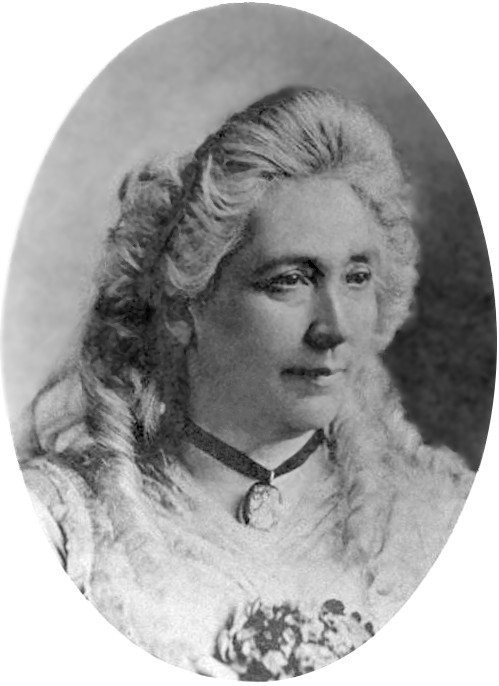
President Lincoln appointed John Frémont major general in command of the Union Army's Western Department at the start of the war; after repeated clashes with the White House, Frémont resigned by late 1862.1 On October 13, 1863, while the Frémonts were in St. Louis, the federal government seized the Black Point property by executive order of Lincoln — citing wartime necessity — and demolished the house to build gun batteries for San Francisco's coastal defense.41 The Frémonts were never paid.1
The compensation fight outlived everyone involved. In 1870 the government returned neighboring land to 49 other claimants but not to Frémont; over the following decades at least 24 congressional committees voted to compensate him, and in February 1898 President William McKinley signed a bill directing the Court of Claims to fix the award.1 The Frémonts' descendants were still suing the federal government over the parcel in 1968 — more than a century after the seizure.110
In 1882 the post was renamed Fort Mason after Richard Barnes Mason (1797–1850), the fifth US military governor of California and the author of the official report to President Polk confirming the August 1848 discovery of gold at Sutter's Mill — the dispatch credited with igniting the California Gold Rush.7 Mason was a direct descendant of George Mason IV, the framer of the 1776 Virginia Declaration of Rights whose language shaped the US Bill of Rights.7 He died in 1850, 32 years before the San Francisco post bore his name.7
The Civil War batteries on Upper Fort Mason were built in 1864: a brick breastwork mounting six 10-inch Rodman cannons and six 42-pounder guns.1 An excavation in the early 1980s uncovered the well-preserved western half of the temporary battery, which has since been restored to its Civil War condition.1 In 1885 President Grover Cleveland's Endicott Board ranked San Francisco Harbor second only to New York in strategic importance, triggering a wave of new coastal fortifications around the Bay — Fort Mason among them.1
From 1904 to 1907 Fort Mason served as the headquarters of the newly established US Army Pacific Division, whose first and only commander was Major General Arthur MacArthur Jr. — father of Douglas MacArthur.1 The division was eliminated by the War Department in 1907 under Secretary of War William Howard Taft, and Fort Mason's defining role shifted from command post to logistics base.1
Beginning in 1912, the Army built three piers, a complex of warehouses, and the Fort Mason Tunnel under Upper Fort Mason to connect the new port to the State Belt Railroad along the Embarcadero.1 The piers were completed by 1915 and became the Pacific home port for the Army Transport Service, which supplied US posts in Hawaii, the Philippines, and the Pacific islands.1 The Army ferry USAT General Frank M. Coxe ran up to eight trips a day from Fort Mason to the processing depot at Fort McDowell on Angel Island; USAT Meigs shipped cavalry horses to Fort Mills in the Philippines.1
On May 6, 1932 the complex was formally designated the San Francisco Port of Embarkation (SFPOE) under Brigadier General Charles S. Lincoln — modeled explicitly on the New York Port of Embarkation, which had supplied US forces in World War I.2 Fort Mason became both the headquarters of the SFPOE command and a component of it.2 When the Second World War reached the Pacific, the Army realized Fort Mason's piers were too small to support a full port of embarkation and, starting in early 1941, began acquiring property across the Bay Area — eventually assembling 13 additional installations including the 624.5-acre Oakland Army Base, Camp Stoneman at Pittsburg, Hamilton Field, and leased piers at Alameda, Richmond, and Stockton.2

At peak the SFPOE operated 20 piers with 43 deepwater berths, 2,867,000 square feet of warehouse space, 1,984,000 square feet of transit sheds, and 7,640,000 square feet of open storage — roughly two-thirds of all US troops sent to the Pacific Theater shipped through it.21 Over the 45 months of the war, the port moved 1,647,174 passengers and 23,589,472 measured tons of cargo to the Pacific; its single highest month was August 1945, when 93,986 outbound passengers were loaded.15 Between September 1945 and October 1946 nearly 800,000 returning troops passed back through the gate.5
The port's scale distorted San Francisco's rail network. On a single day — January 12, 1942, five weeks after Pearl Harbor — 3,208 loaded freight cars arrived at the port, far exceeding shipping-out capacity and forcing the SFPOE to temporarily embargo inbound traffic; five months later the port was moving 2,500 cars a day cleanly.2 The Emeryville Motor Depot, a dedicated vehicle-processing facility built for the port, shipped 99,731 tanks, trucks, and tractors between December 1941 and August 1945.2 Camp Stoneman alone processed over 1.5 million troops across WWII and the Korean War; Fort McDowell processed roughly 300,000, feeding its 1,410-seat mess hall in three seatings per meal.2
One minor lieutenant in the SFPOE's early wartime planning unit, "The Backroom Boys," was future president Ronald Reagan, a cavalry reservist assigned to Fort Mason in April 1942 and classified for limited service only because of his poor eyesight.1 He was reassigned to the Army Air Forces' First Motion Picture Unit within weeks.1
The SFPOE reprised its Pacific-shipping role through the Korean War (1950–1953); in October 1955 it was renamed the US Army Transportation Terminal Command Pacific.2 Embarkation operations continued into the early 1960s, but in 1962 the Army declared Fort Mason military surplus, ending 111 years of continuous federal military presence.13 In 1965 the headquarters moved across the Bay to the Oakland Army Terminal, and most of Fort Mason's embarkation facilities fell into disuse.1 The Army kept a foothold in the officer housing on the upper campus, some of which is still in Army use today.1
A decade of dilapidation followed. Public attention on unused federal land in the Bay Area — galvanized by the 1969 Native American occupation of Alcatraz — made Fort Mason's fate a live question.3 In 1972 Representative Philip Burton's HR 9498 established the Golden Gate National Recreation Area (GGNRA), a roughly 80,000-acre urban national park that absorbed the Fort Mason lands and much of the Presidio, Marin Headlands, and Pacific coast beyond.3 The National Park Service, unwilling to operate the lower campus directly, solicited a partner to be a "pioneer in the imaginative use of urban national parklands" and preserve "the diverse culture of the Bay Area."3
A nonprofit called the Fort Mason Foundation answered the call, refurbished the dilapidated campus, and opened it to the public on January 1, 1977; the first cohort of nonprofit residents moved in shortly after.3 The foundation was renamed Fort Mason Center for Arts & Culture (FMCAC) in 2015.3 On February 4, 1985 the former Port of Embarkation was designated a National Historic Landmark District by the Department of the Interior, covering 49 buildings of historic significance across the roughly 1,200-acre fort area.1
Two of the first-generation FMCAC residents reshaped American culture from within Building D and Building A. On June 27, 1978 Magic Theatre — already a leading West Coast home for new work — premiered Sam Shepard's [[buried-child|Buried Child]], directed by Robert Woodruff; the play won the 1979 Pulitzer Prize for Drama and has since had more than 400 productions worldwide.13143 Shepard went on to write eleven more plays at Magic Theatre over the next decade while serving as playwright-in-residence.14
In July 1979 the San Francisco Zen Center opened Greens Restaurant in a pier shed on the Fort Mason waterfront, with Deborah Madison — an 18-year student of Zen — as founding chef.1115 The New York Times later wrote that Greens "established vegetarian food as a cuisine in America"; Madison's The Greens Cookbook (1987) became the template for a generation of vegetarian restaurants.1115

Fort Mason also hosted moments of national cultural reckoning. In 1980 the People's Republic of China held its first trade show ever sent abroad in the Festival Pavilion — tens of thousands of San Franciscans queued outside — opening the door to expanded US–China trade.3 In 1990 the NAMES Project AIDS Memorial Quilt, created in San Francisco in 1987, returned to the city for display at Fort Mason after its first exhibition on the National Mall.3 In 2005 former vice president Al Gore delivered the keynote at the United Nations' World Environment Day at Fort Mason; the climate-change material in that speech became the basis for the 2006 Oscar-winning film An Inconvenient Truth.3
Microsoft treated the Fort Mason Festival Pavilion as its preferred San Francisco launch venue in the late 1990s. In October 1997 the company used it to unveil Internet Explorer 4.0; on June 25–26, 1998 Bill Gates headlined the Windows 98 launch at the same pavilion, comparing the PC industry to the 1920s auto business and predicting PCs in 60% of American homes by 2001.98 FMCAC's own history lists a 1989 Steve Jobs Mac OS unveiling at the Festival Pavilion, but this claim is not corroborated by independent press coverage, and Jobs was not an executive at Apple in 1989 — he had been forced out in 1985 and did not return until 1997.3 In the decades since, Google and Facebook have also held product events on campus.3
The upper campus — Upper Fort Mason — is the operational headquarters of the Golden Gate NRA and the San Francisco Maritime NHP.1 A large block of officer housing has been converted into an HI-USA youth hostel; the Civil War batteries have been partially restored; walking paths along the bluff trace the 1860s shoreline out to the view of Alcatraz.1 The lower campus — Fort Mason Center for Arts & Culture — runs the waterfront piers and warehouses as a nonprofit hub of roughly 25 tenant organizations: Magic Theatre, Greens, The Interval (the Long Now Foundation's salon and bar), Radhaus, BATS Improv, Blue Bear School of Music, Gallery 308, SFMOMA Artists Gallery, Museo ItaloAmericano, the Mexican Museum, Flax Art + Design (San Francisco's oldest art supply store), and Arion Press, the nation's last fully integrated fine-book publisher, which relocated its 49 tons of historic presses to a new 10,000-square-foot glass-front facility designed by Jensen Architects in 2024.163 In 2025 FMCAC launched Fort Mason Night Market with West Coast Craft, Off the Grid, and Stern Grove Festival (the latter moving its offices to campus the same year).3
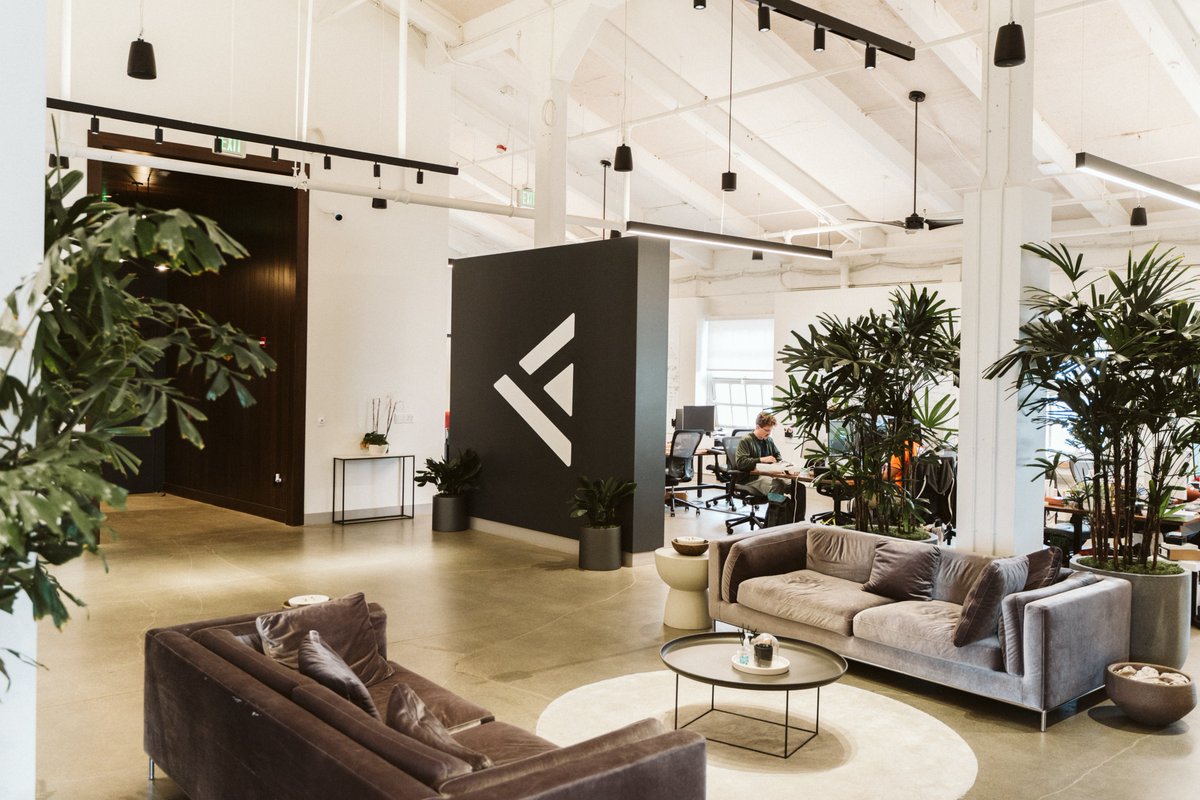
Founders, Inc. has been a Fort Mason resident since 2022, renting space in Building B (2 Marina Blvd, Suite 200).12 From July 2023 until August 2024 it shared the building with buildspace, which ran its Nights & Weekends program from the same suite; when buildspace closed in August 2024, Founders, Inc. expanded into the vacated footprint and now operates a 42,000-square-foot campus — a hardware lab, a media studio, open workspace for roughly 80 founders, a gym, and a gaming room — across Building B.12 It is one of the few for-profit venture operations in a campus that remains majority-nonprofit.16
 № 1
№ 1On the evening of August 23, 2024, Farza Majeed posted a tweet at 5:11 PM Pacific time that began: "I have some tough news. Today, @_buildspace is closing." The tweet accumulated...
 № 2
№ 2When buildspace closed on August 24, 2024, four of its employees moved directly to Founders, Inc. — the venture firm that shared Fort Mason Building B with buildspace and had...
 № 3
№ 3Bebo was a social network that launched in January 2005, peaked at 40 million registered users, sold to AOL for $850 million in 2008, and collapsed within two years. What survived...