
Extended Reality (XR) is the umbrella term for the full spectrum of technologies that blend the physical and digital worlds — from augmented reality (AR), which overlays digital content onto the real world, to virtual reality (VR), which replaces it entirely, with mixed reality (MR) occupying the rich middle ground where virtual objects interact with real surfaces, lighting, and space.
The field is not new. Ivan Sutherland built the first head-mounted display in 1968. The theoretical framework that defines the spectrum — the Reality-Virtuality Continuum — was published in 1994. Hand tracking, spatial UI, body reconstruction, and scene understanding have been active research areas for decades. What has changed is the hardware: modern headsets, cameras, and compute have finally made real-time XR practical at consumer scale.
This wiki documents the full depth of the field: the hardware platforms, tracking technologies, interaction models, rendering techniques, standards, and the companies and research that have shaped where XR stands today.
The XR Spectrum
The continuum from physical to virtual runs through four zones:
- Real Environment — the unaugmented physical world
- Augmented Reality (AR) — digital content anchored to the real world (e.g. HoloLens, ARKit)
- Mixed Reality (MR) — virtual objects that interact with real geometry, surfaces, and lighting
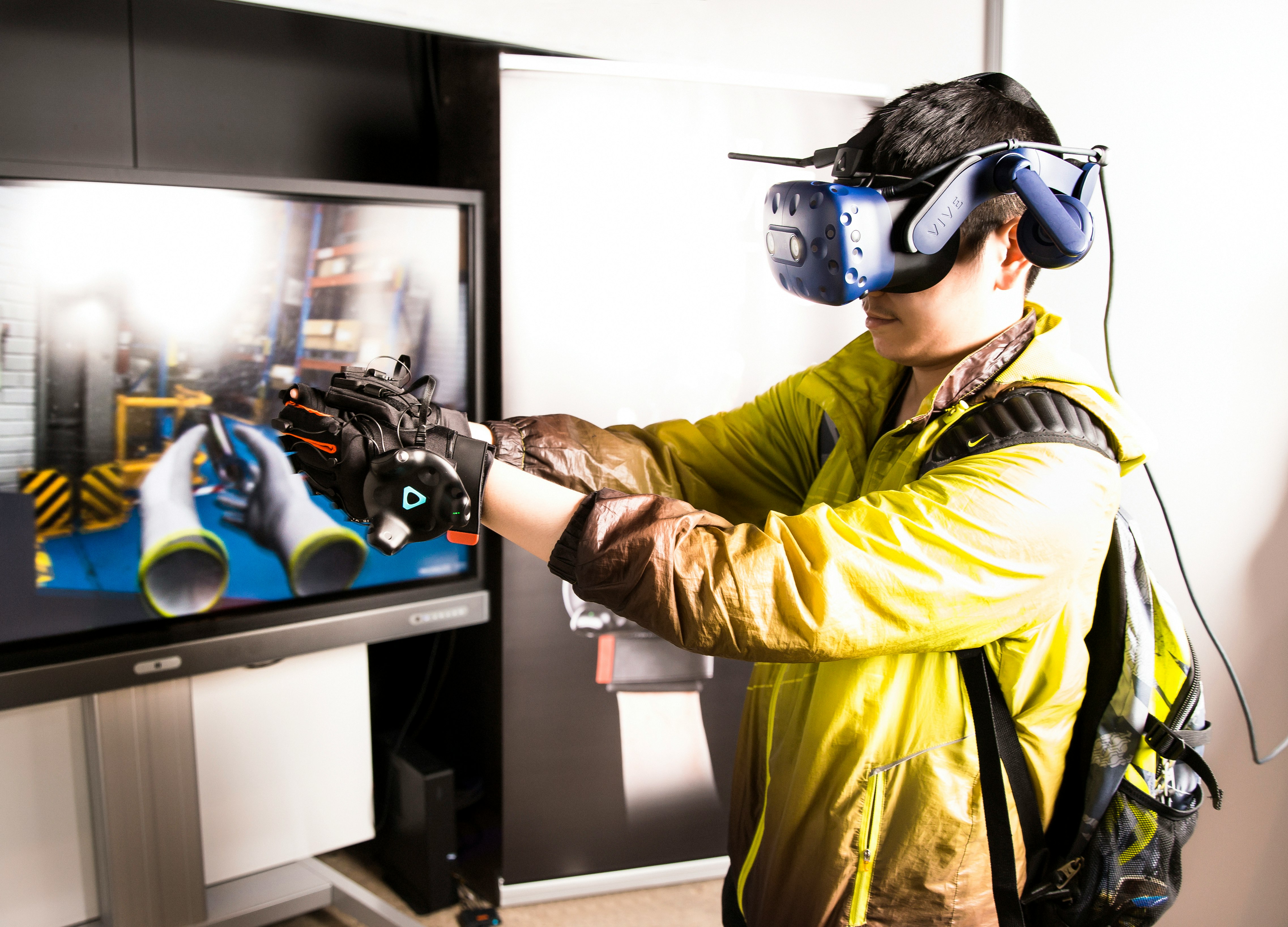
- Virtual Reality (VR) — a fully synthetic environment replacing the real world (e.g. Meta Quest, SteamVR)
The term XR (Extended Reality) covers all of them, and the boundaries are increasingly blurry — modern headsets like the Meta Quest 3 and Apple Vision Pro support both VR and MR modes via passthrough cameras.
Explore by Topic
Key Areas
Foundations — The Reality-Virtuality Continuum, presence theory, immersion, and the historical milestones from Sutherland's Sword of Damocles to today.
Tracking — How XR systems know where your hands, eyes, face, and body are: SLAM, inside-out tracking, hand tracking, eye tracking, skeleton reconstruction, and spatial anchors.
Interaction & UI — Spatial menus, virtual keyboards, ray casting, near-field hand interaction, gaze-dwell selection, and the design patterns unique to three-dimensional interfaces.
Rendering & Display — Passthrough (video vs optical see-through), occlusion, scene mesh reconstruction, foveated rendering, latency, and the vergence-accommodation conflict.
Hardware — The headsets, sensors, and devices: HoloLens, Apple Vision Pro, Meta Quest, Magic Leap, Varjo, XREAL, and the hardware generations that preceded them.
Standards & Frameworks — OpenXR, WebXR, ARKit, ARCore, MRTK, OpenVR/SteamVR, and the SDKs that let developers target multiple platforms from a single codebase.
Companies & Projects — Microsoft, Meta, Apple, Niantic, Ultraleap, Magic Leap, and the open-source projects that have moved the field forward.
Research — Foundational papers, university labs, and the scientific advances in perception, optics, and human-computer interaction that underpin XR.