Hubert Thieblot
General Partner at Founders, Inc.
✽
Hubert Thieblot is a French entrepreneur and venture capitalist, born in 1984 in Paris. He is General Partner at Founders, Inc., the San Francisco-based venture fund and campus at Fort Mason, where he has led investments since April 2022.213 Before f.inc, Thieblot founded Curse, Inc. — a gaming media company that began as a hobby website for his World of Warcraft guild and grew into a network of more than sixty-five properties reaching thirty million monthly visitors before it was acquired in August 2016 by Twitch, the streaming service owned by Amazon.14 After the acquisition he served two years as a Twitch vice president, made angel investments in gaming and metaverse startups, then joined f.inc, whose portfolio includes the billion-dollar real-time-communications company LiveKit.638 Thieblot holds French, Swiss, and American nationality, lives in San Francisco with his partner Heather and three children, and writes on X under the handle @hthieblot.42

Thieblot was born in Paris in 1984. His father was an entrepreneur who had built companies of his own; one of Thieblot's older brothers competed professionally in Counter-Strike in Korea, exposing the family to esports years before the term was in common use, and would later become Curse's first paid employee.1516 He has described himself as "always terrible at school except in Math"; TechCrunch later described him as a high-school dropout.153 In a 2012 AMA, he said his parents "hated gaming" when he decided to play full-time rather than finish high school, but were happy with the outcome after Curse succeeded.15 His path between Paris and San Francisco was unusually itinerant for a founder his age. In a 2012 Reddit AMA he summarized the route: "I was born in Paris and left France at 19, lived 4 months in Sweden, 1 year in Germany, back to Paris for 18 months then now 5 years in the US."15 Curse was registered in Paris, then relocated to Germany so the small team could share an apartment while building the site, and by 2007–2008 was moving its center of gravity to San Francisco.1817
His earliest games were on an Atari ST 520 around the age of six — Populous, Frontier: Elite II, and Ishar — followed in his teens by Phantasy Star Online on the Dreamcast, Diablo, StarCraft, the French-localized MMO The Fourth Coming, and three years of Dark Age of Camelot before World of Warcraft.1517 During the WoW alpha he ran a private FTP of add-ons that the guild used in raids; that tool became the basis for Curse-Gaming.com, which he later described as a service born from the difficulty of finding and downloading add-ons.1417
He did not come to Curse with formal business or software training. In the same AMA he wrote that he knew "nothing about companies, web design, programing, management" when he started, did not know how to program, and relied on guild members who wanted to join Curse to build the original site.15 Smart Business later described the early project as something he built while still a Paris high-school student, first for friends and then for the broader WoW add-on community.57

The Curse name began in 2001 as the name of a multiplayer guild Thieblot founded to play smaller Korean MMOs and Dark Age of Camelot; he has said he chose it without realizing what the English word meant, and the name simply stuck.1415 On DAoC the guild "achieved some notoriety," and in World of Warcraft it raided on the European PvP server Stormscale and became one of the continent's strongest PvE guilds, scoring multiple EU-first boss kills and producing gameplay videos that were downloaded millions of times.14171615
Curse-Gaming.com launched publicly on January 9, 2005 as a database of WoW add-ons, drawing on the FTP the guild had been using during the game's alpha and beta.17 Thieblot was twenty years old.15 He ran it without advertising for the first nine months, paying server costs out of pocket while sleeping on a friend's floor; he has joked that he "can't eat Chinese noodles for a few more years."15 When traffic crossed roughly 1.5 million monthly uniques in late 2005 and bandwidth costs became unsustainable, his older brother suggested putting Google AdSense on the site and joined as the first employee, "structuring the business to bring in advertising."1716 The company was formally incorporated in 2006.
A French ad-serving company that also owned the women's web portal auFeminin introduced Thieblot to investors in Paris.17 In December 2006 Curse closed an $800,000 angel round; in July 2007 it raised a $5 million Series A led by AGF Private Equity, with the team headed out of Germany.1848 Curse, Inc. remained registered to Thieblot in the French commercial registry through this period.55
The 2008 financial crisis nearly killed the company. As Thieblot has recounted, the team had burned most of its Series A, "went from 20 investor meetings/week to 0 for a year," carried six weeks of cash and 20 employees, and was saved by a pair of angels.39 An early-2009 weekend visit to a stranger in San Francisco produced a $200,000 convertible loan within twenty-four hours; within two days the round had grown to $600,000. "He was a gamer himself so he understood our product very well… This would not have happened anywhere else in the world," Thieblot wrote.39 In December 2009 Curse closed a $6 million Series B led by Ventech Capital with AGF returning and Jeff Clavier's SoftTech VC participating.27 The episode is the origin of his evangelism for San Francisco as a place to start a company.
With a large North American audience and most major games-media competitors based in the United States, Thieblot relocated Curse's business center to San Francisco in 2007–2008, recruited Wilson Kriegel as general manager, and hired aggressively against the largest American gaming media properties.1815 By June 2011 Curse had reached 14.1 million monthly uniques; in 2011 Inc. 500 ranked it the 405th fastest-growing company in the United States and the San Francisco Business Times ranked it 22nd in the Bay Area.28 Curse was also named a Microsoft BizSpark One company in 2010, and in May 2012 Ernst & Young named Thieblot a Northern California Entrepreneur of the Year finalist from nearly 135 nominations.58 Annual revenue was about $11 million for fiscal 2011, per data Thieblot disclosed during his 2012 AMA.15
Curse expanded from add-on hosting into a network of community sites, news outlets, forums, databases, and original video covering World of Warcraft, League of Legends, Minecraft, RuneScape, Hearthstone, Diablo, and dozens of other games. Smart Business described the shift as a response to the add-on market becoming too narrow: after the 2008 move to the United States, Curse added community news, forums, quest and item databases, and other content around the games its users were already playing.57 Acquisitions filled in coverage. In July 2010 Curse bought MMO-Champion from Major League Gaming for an undisclosed price; at the time MMO-Champion had seven million monthly uniques and over eighty million page views and its founder, Fabien "Boubouille" Bonte, joined the staff.23 By June 2012 the company owned fifty-nine sites and had passed 21 million monthly unique visitors.28
Across its life Curse shipped a stack of products that, taken together, formed an end-to-end ecosystem for game communities:
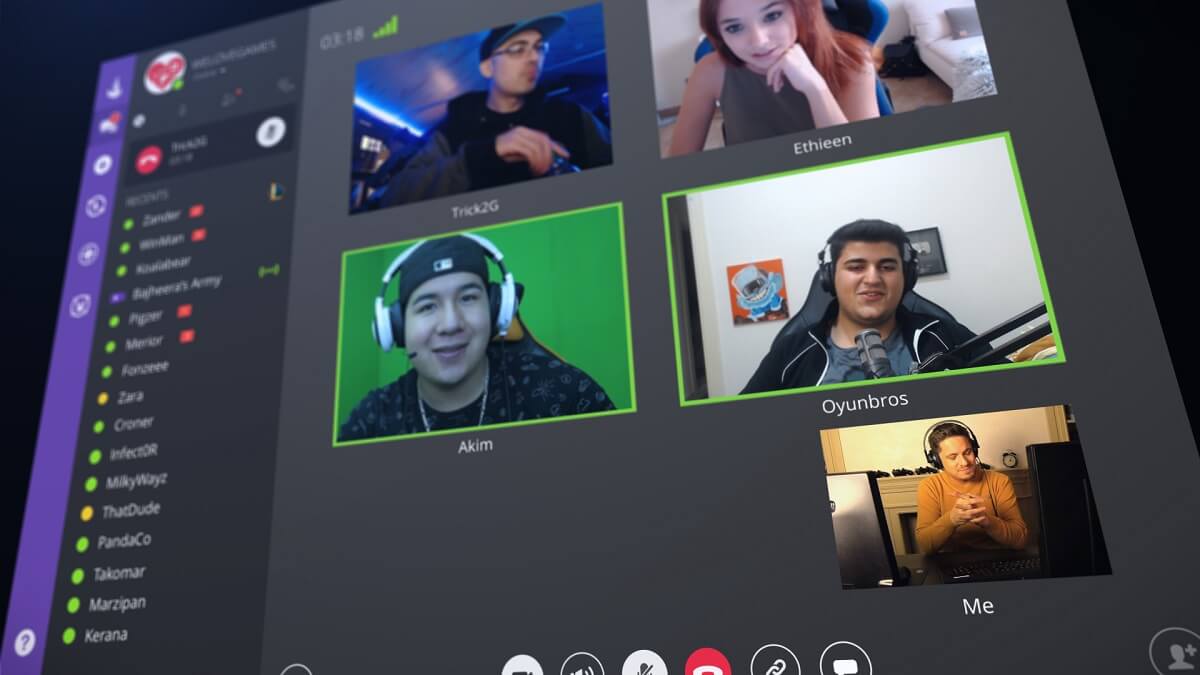
Curse's senior team in the Thieblot era is the through-line by which most of its assets later moved through the gaming industry. Wilson Kriegel, like Thieblot a French expatriate, joined as EVP and general manager in September 2006 — recruited from the LAN-gaming-center scene that had also produced Major League Gaming — and was the executive who proposed San Francisco as the company's American base.18 Michael Comperda, a University of Alabama in Huntsville graduate, joined as chief technology officer in August 2007 and stayed for nine years, championing the move to Huntsville and later running Curse Voice's product organization in Irvine.49 Donovan Duncan, who as a teenager had built and sold the WoW/EverQuest trading platform XShard, became VP of marketing and then president of Curse Media; he is the source of the company's most-quoted line, "What ESPN does for sports, we do for gaming," which Brandon Byrne also used at the 2013 Huntsville press conference.2149 Adam Bradford led the build of D&D Beyond out of the Huntsville office; he stayed through the Twitch and Fandom transitions before joining Demiplane as Chief Development Officer in 2021.33 Fabien "Boubouille" Bonte, the founder of MMO-Champion, joined in 2010 after Curse acquired his site from Major League Gaming and continued running it as the company's most heavily trafficked editorial property.23 At the time of the Twitch sale, Curse maintained offices in Huntsville, San Francisco, Irvine, New York, Los Angeles, Brighton, Berlin, and Sydney, with smaller satellite operations in France, Canada, and Ireland.21
Curse's esports operation was a separate organization run by Steve "LiQuiD112" Arhancet under a Curse, Inc. title sponsorship beginning August 25, 2011, formed when Arhancet's roster (originally "Team XXX") moved under the Curse banner.43 Thieblot framed the move in his December 2012 Forbes interview as an opportunistic bet on the rise of League of Legends esports.16 Over the next four years Team Curse fielded competitive rosters in League of Legends (NA and EU), Counter-Strike, Hearthstone, Call of Duty, Heroes of the Storm, Super Smash Bros. Melee, and Street Fighter; Thieblot publicly declined to invest in StarCraft II, calling its esports scene "really saturated" and saying he did "not see a bright future in North American eSports" for it.1643 The company maintained a Beverly Hills team house for the LoL roster at roughly $20,000 a month, plus a planned house in Germany for the EU squad.15
The League of Legends team was a high-profile, persistently-frustrated participant in the early NA Championship Series. Curse fielded players who would later become household names — Doublelift, IWillDominate, Voyboy, Saintvicious, Cop, Quas, Xpecial, Edward, Piglet, FeniX — and finished fourth in every NA LCS split it competed in from Spring 2013 through Summer 2014, never qualifying for the World Championship.43 At MLG Summer Championship 2012, Curse beat Team Dignitas 3–2 in a final that Major League Gaming and Riot then disqualified after both teams admitted to splitting prize money before the match was played.45 A European squad was acquired from Absolute Legends in June 2012, rebranded as Team LoLPro in early 2013, and disbanded after failing to qualify for the EU LCS that month; a North American B-team, Curse Academy, won the 2014 Expansion Tournament and earned an LCS slot.43
In April 2014 Arhancet bought the esports arm out of Curse, Inc., leaving the parent company only as a title sponsor and the brand itself in Arhancet's hands.43 When Riot announced new LCS rules in late 2014 barring a single sponsor from backing more than one team — a problem because Curse, Inc. was selling Curse Voice to other LCS organizations — Arhancet and Team Liquid founder Victor "Nazgul" Goossens consolidated the two operations. On January 6, 2015, Team Curse and Team Liquid announced a full merger; the entire roster, staff, and Arhancet himself joined Team Liquid, and Curse Academy was sold off and rebranded as Gravity Gaming, whose LCS slot was later sold to Rick Fox and rebranded as Echo Fox.4443
In June 2013 Thieblot announced that Curse was moving its corporate headquarters from San Francisco to Huntsville, Alabama, where the company had operated a development office for about three years.21 He cited the city's affordability, real-estate costs, and the dense engineering labor pool around NASA's Marshall Space Flight Center and the University of Alabama in Huntsville.20 The decision split the company. Roughly twenty San Francisco employees quit rather than relocate. "It was very controversial. A lot of people did not like me for that decision," he told TechCrunch's Kim-Mai Cutler in 2014.19 In a 2014 essay for Made in Alabama he framed the choice as a strategic necessity: "We couldn't just 'slug it out' with the very large and very well-funded companies that exist in San Francisco, where our headquarters used to be."20 By September 2015 the Huntsville office had grown to about sixty staff, with Curse Voice's team relocated to a new Irvine, California office to be closer to game developers including Riot Games.22
In July 2014 Curse raised $16 million in fresh funding — a $10 million Series B led by GGV Capital plus a $6 million venture-debt facility from Multiplier Capital earmarked for acquisitions. At the time the company reported one billion monthly page views, twenty-eight million monthly unique visitors, 110 employees, and profitability through advertising; Thieblot told TechCrunch he had chosen debt for the acquisition fund specifically to avoid diluting existing shareholders.3 The deal was one of very few stories Curse ever drew in the French business press; FrenchWeb covered it under the headline "Jeux en ligne: fondée par un Français, Curse lève 10 millions de dollars," quoting Thieblot on GGV partner Hans Tung's experience with global gaming companies.47
A year later, on July 7, 2015, Securities and Exchange Commission filings revealed that Riot Games — the developer of League of Legends — had invested $29,999,999 in Curse, with additional funding tied to milestones.25 Riot's spokesman characterized the deal as a technology-development bet rather than a partnership; Thieblot said simply, "Riot really believes in what we're doing and where we're going."25 Total capital raised reached roughly $58 million.1

On August 16, 2016, Twitch announced it would acquire Curse for an undisclosed amount.1 Curse was operating more than sixty-five gaming sites and employed more than 140 people across offices in Huntsville, San Francisco, Irvine, New York, Los Angeles, Brighton, and Berlin.41 Twitch's then-CEO Emmett Shear called Curse "an innovator in the games industry with a strong culture built around its offerings — from Curse Voice and Curse Client to Gamepedia."1 Thieblot's public statement was carefully diplomatic: "I'm really excited to see how we can bring Curse services into the Twitch network, and provide an unparalleled experience to both Curse and Twitch users."4 No price was ever disclosed publicly.
In private the experience was harder than the press release suggested. Nine years later he wrote on X: "I remember signing the DocuSign, Amazon corp dev called to congratulate me. At that moment, I felt nothing. Total void. Zero excitement, even though I had just become rich… My exit day was the worst day of my founder journey. I lost my baby."40
Curse's pieces were sold off in stages over the next four years.
Thieblot stayed at Twitch after the acquisition. Twitch CEO Emmett Shear became a personal mentor; when Shear stepped down in March 2023, Thieblot wrote on X: "Thank you @eshear for having changed my life, your mentorship and your passion for twitch, its streamers, and the gaming community."50 He stepped down as CEO of Curse in January 2018 and took on the role of VP of Creator Product, leading the team responsible for streaming tools, dashboards, and progression systems for Twitch creators.6 In July 2019 he moved to a second VP role focused on emerging markets and mobile-first product strategy for Twitch globally, which he held until November 2020.6
In the gap between Twitch and f.inc, Thieblot invested personally in a small set of gaming and metaverse startups, generally co-investing alongside other Twitch alumni such as former Twitch COO Kevin Lin:
The investments share a pattern: gaming or gaming-adjacent companies, post-exit founder networks, and a tilt toward the metaverse/Web3 thesis that was peaking in late 2021. Crunchbase records Ready Player Me as his only formal exit from this period.5

Thieblot joined Founders, Inc. as General Partner in April 2022, two years after Furqan Rydhan founded the firm in the wake of his AppLovin and thirdweb work.213 At f.inc, Thieblot is the firm's primary investment decision-maker and shapes its program portfolio while Rydhan leads the studio and platform side.1013 The fund operates from a campus at Fort Mason in San Francisco, where founders work alongside the team and present working products rather than slide decks. As Thieblot has put it: "We absolutely hate pitch decks. We never like making them as founders because building a company is about doing, not making a polished presentation."8
When he joined, f.inc was incubating two to three companies a year and writing checks of up to $50,000 into roughly twenty more.7 Under his tenure the firm has shifted to running cohort programs that bring in hundreds of founders at a time with $100,000–$250,000 first checks.128
The first program to draw outside attention was the Vision Pro Residency in February–March 2024, in which twenty hand-picked developers built Apple Vision Pro applications at Fort Mason over four weeks, with up to $50,000 awarded to the strongest project and access to demo loaner headsets for participants who hadn't bought their own.7 Thieblot called the device "a leap of a few years in one piece of hardware. It's like peeking into the future" and described the residency as creating "this early community of app builders that can collaborate together, that can share tips and tricks together, that can also team up together. And you know, we might invest in some of the projects."7
The cohort model was then formalized in a series of programs through 2025–2026: Ship It (February–March 2025, 60+ teams), Off Season (summer 2025, 48 teams), Blueprint (fall 2025, 50 hardware builders), and Artifact (January–February 2026, 200 founders).8 In spring 2026, the firm consolidated these formats into Canopy, a single five-week program running four times per year with 100 in-person teams and 400 online teams in its inaugural cohort. Thieblot has outlined the resulting calendar as Artifact in January, Canopy in spring, Off Season in summer, and Blueprint in fall, plus a rolling Wild Card residency for founders who prefer not to wait between cohorts.8
By March 2026 Thieblot reported that f.inc had funded 55 startups in the prior year, produced its first unicorn, doubled its campus footprint to 45,000 square feet across three San Francisco locations, quadrupled deployed capital, and brought more than 1,000 founders to San Francisco through its programs; half of the firm's 2025 investments were hardware companies.8 The unicorn is LiveKit, the open-source real-time-communication platform powering ChatGPT's Voice Mode, which raised a $100 million Series C at a $1 billion valuation led by Index Ventures on January 22, 2026.38 In its Q4 2025 Venture Monitor, PitchBook–NVCA ranked Founders, Inc. the tenth most active venture investor in the United States with forty-one deals.8
Founders, Inc. publishes a portfolio page of more than a hundred companies; a representative slice of investments Thieblot has personally championed or that founders have publicly attributed to him includes:
Thieblot writes prolifically on X and LinkedIn — a stream of short, repeatable claims about how to evaluate founders that doubles as f.inc's funnel. The published criteria on f.inc/about list "prolific at building," "technical and curious," "founder × market fit," and "ambition and drive" as green flags, alongside the firm's refusal to take pitch decks at all.12 His public lists tend toward the same thesis applied to people. One representative tweet: "If a founder spent their childhood grinding ranked in any competitive game, building random stuff with a 3D printer or Raspberry Pi, selling stuff online, making Minecraft mods or Roblox games — invest in them immediately."42
His most-circulated post, from April 2026, is a defense of persistence aimed at founders deep in the wilderness: "Never quit as a founder. I'm begging you. It's 0 for longer than you'll ever expect. No momentum. Soul-crushing doubts. Nobody seems to care. Even when it looks like it's working, it's not. You keep trying new things. You don't lose hope. Then it snaps to 100… You didn't get lucky, you just didn't leave."41 The theme goes back to his Curse-era advice: in 2012 he told would-be founders to start with something they were "REALLY interested in," large enough to support income, because "nothing feels better than doing something you love."15 He has connected this to his own arc: "I've made it my life mission to help the next generation of founders find their path and their people."9
A few of his other widely shared takes:
Thieblot lives in San Francisco with his partner Heather and three children; he has held French nationality since birth and has acquired Swiss and American citizenship.42 His self-description on X reads: "Investing @fdotinc, Founder @curseforge acq by @Twitch, love @oheather1337, 3x dad, French/Swiss/American."42 He has joked publicly that he uses "Paul" as his Starbucks name in the United States because no barista can pronounce Thieblot.15