Series A
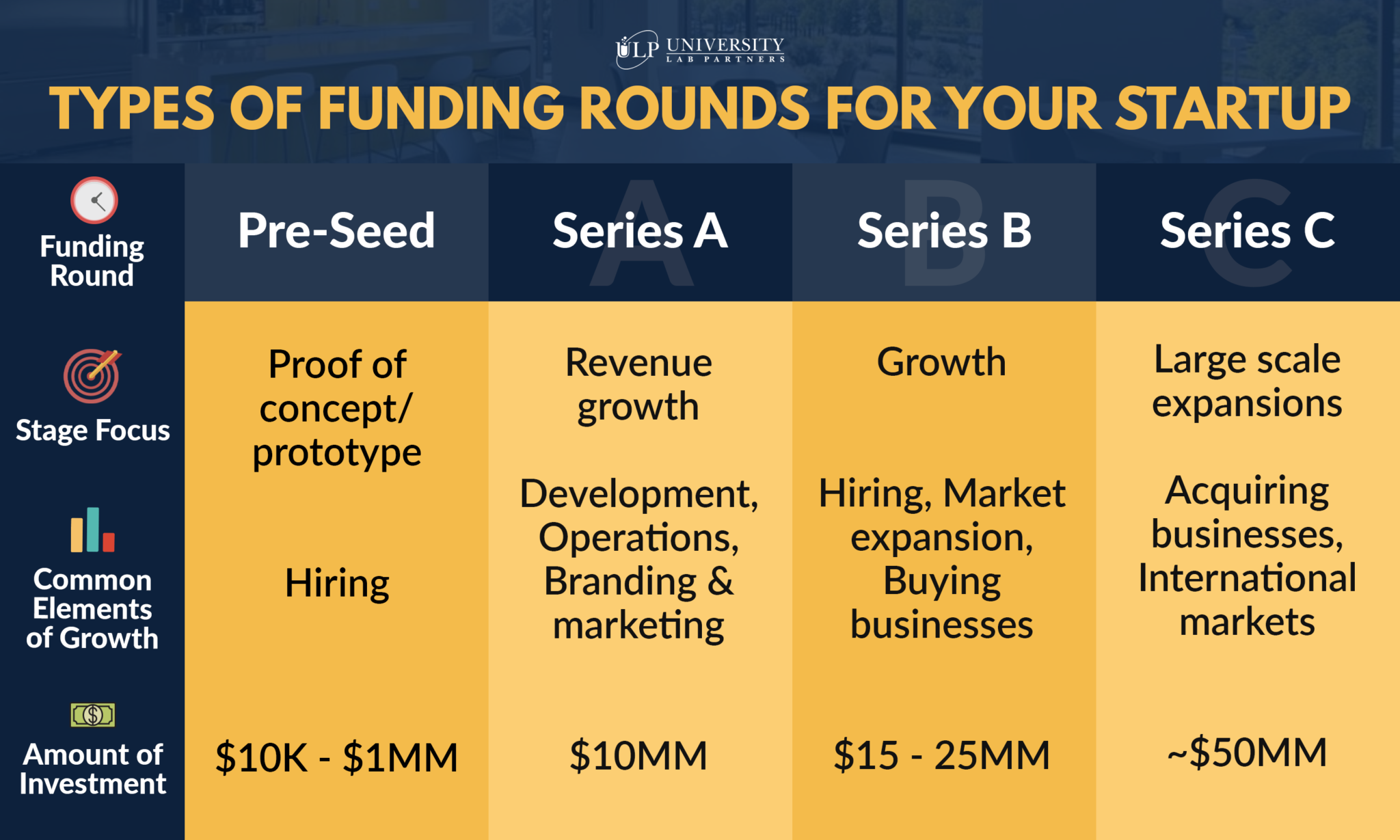
A Series A is the first institutional venture capital round a startup raises, typically following a seed round once a company has demonstrated product-market fit and initial revenue traction. In 2023, the median Series A pre-money valuation in the United States was approximately $38.2 million, down from a peak of roughly $55 million in 2021, according to PitchBook data.2 The median dilution at Series A was 20.5% in Q1 2024, down from 24.1% in Q1 2019, as founders gained stronger negotiating leverage over a sustained period.1
Structure and mechanics
A Series A is structured as a priced equity round, typically issuing preferred stock with standard VC protective provisions: liquidation preference (usually 1x non-participating), anti-dilution ratchets (typically broad-based weighted average), pro-rata rights, and a board seat for the lead investor. The term sheet sets the pre-money valuation, which divided into the amount raised determines the percentage sold. A company raising $10M on a $40M pre-money valuation sells 20% of its equity, leaving the founders' prior dilution from seed rounds intact but further reduced.8
Check sizes in 2023 ranged from roughly $2M to $15M, with the average deal around $15M and the median closer to $5M–$7M.2 The gap between average and median reflects a small number of outsized rounds — the top 10% of Series A companies raised $35M or more in 2023, compared to $45M or more in 2021. Rounds are almost always led by a single venture capital firm that sets price and terms; additional institutional investors join as co-investors, typically receiving smaller allocations and no board representation.
Option pool top-ups are a standard feature of Series A closings. Most term sheets require the company to expand its unallocated employee option pool to 10–20% of the post-money capitalization before the investment closes. This pool expansion is calculated on the pre-money cap table, which effectively increases the dilution absorbed by existing shareholders rather than the new investor — a structural negotiating point founders routinely push back on.8
What investors require
Series A investors evaluate whether a startup has achieved demonstrable product-market fit, defined by measurable evidence rather than qualitative judgment. For B2B SaaS companies, the typical threshold in 2024 is $1M–$3M in annual recurring revenue (ARR) with 100% or greater year-over-year growth and net revenue retention above 100%.7 Consumer companies use different signals: D30 retention rates, monthly active user cohort behavior, and gross margin structure. Investors also assess net dollar retention, churn rates by cohort, and the ratio of customer lifetime value to customer acquisition cost (LTV/CAC), with a ratio of 3x or higher considered a minimum.6
Lead investors at Series A typically conduct 6–10 weeks of due diligence following an initial term sheet. Reference calls with customers, technical architecture review, and detailed financial modeling of the unit economics are standard. Andreessen Horowitz, Sequoia Capital, and Benchmark each run structured due diligence processes that include a full partner meeting presentation before issuing a term sheet. Smaller or more founder-friendly firms such as Founders Fund or Craft Ventures may move in as few as two to three weeks.6
Beyond metrics, Series A partners assess founder-market fit, team completeness, and defensibility of the go-to-market motion. A company with $2M ARR but 3x YoY growth and a clear mechanism for repeatable customer acquisition is typically more fundable than one with $4M ARR that grew 50% through one-off enterprise deals. The quality of the co-investors from the seed round — whether the startup is Y Combinator-backed or supported by credentialed angels — materially affects the inbound interest from top-tier Series A funds.6
Notable examples
Airbnb raised a $7.2M Series A in November 2010, led by Sequoia Capital and Greylock Partners, after growing to 700,000 nights booked since its 2008 seed round.5 The round valued Airbnb at approximately $1.3M pre-money at seed and reflected a substantial step-up, though the pre-money Series A valuation was not disclosed. Sequoia had previously provided the company's $600K seed investment, making the Series A a re-up by the same firm.
Uber raised an $11M Series A in February 2011, led by Benchmark Capital with Bill Gurley taking a board seat.4 The round followed Uber's launch in San Francisco in 2010 and a $1.25M angel round from First Round Capital and others. Benchmark's $11M check eventually returned more than $7 billion as Uber scaled to a $72B IPO in 2019. YouTube raised $11.5M in a Series A from Sequoia Capital and ARTIS Ventures in late 2005, roughly 10 months before Google acquired the company for $1.65B in October 2006.
WhatsApp closed an $8M Series A from Sequoia Capital in 2011 after a $250K seed the year prior.3 The company raised only $60M total across its entire venture history before Facebook acquired it for $19B in 2014. The WhatsApp example illustrates that capital efficiency at Series A — not round size — predicts outcomes; the company reached 450 million monthly active users before its acquisition.
Market context
The 2021 boom pushed median Series A pre-money valuations to all-time highs and compressed diligence timelines to as short as one week. As interest rates rose from early 2022, the market corrected: the number of Series A deals in the US declined, and the median step-up ratio from seed to Series A fell to 1.68x by 2023 — near the lowest since 2013.2 Seed valuations simultaneously rose, as seed investors competed to back more companies, creating a valuation compression effect at Series A where startups found their step-up smaller than they had modeled.
The Q4 2024 PitchBook-NVCA Venture Monitor noted that median deal sizes trended upward across all stages in 2024, partially driven by AI companies capturing 46.4% of total deal value.3 This concentration means aggregate Series A data in 2024 and 2025 is skewed by AI infrastructure and application companies raising at valuations and on timelines atypical of non-AI startups. Founders in non-AI verticals raising a Series A in this environment faced a more investor-friendly market, with longer diligence timelines and more scrutiny on path-to-profitability than was common in 2019–2021.