Triceps
The triceps, or triceps brachii, is the large three-headed muscle on the back of the upper arm. It is the primary extensor of the elbow and plays an important role in all pressing movements.
Anatomy
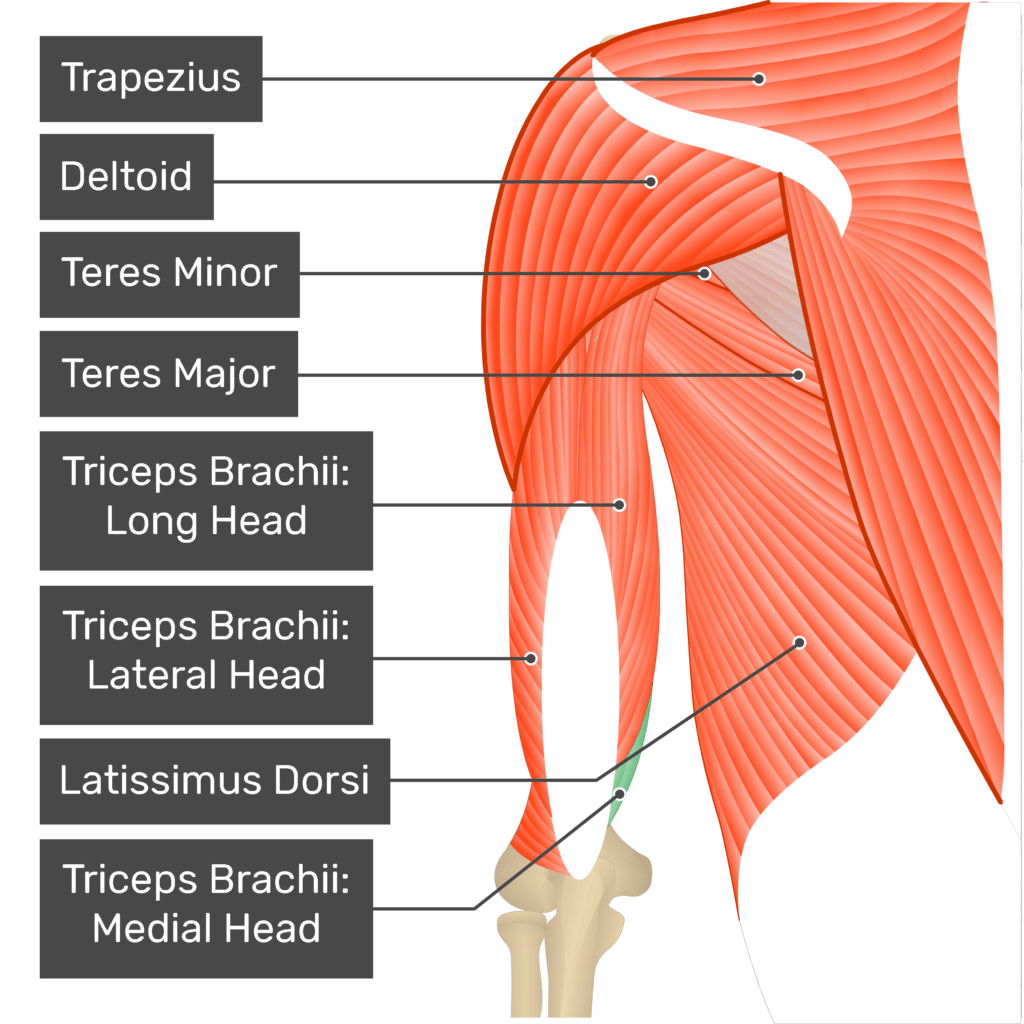
The triceps brachii occupies the posterior compartment of the arm. As its name implies, it consists of three distinct heads: the long head, lateral head, and medial head. All three heads converge to form a common tendon that inserts onto the olecranon process of the ulna12.
The long head originates from the infraglenoid tubercle of the scapula. Because it crosses the shoulder joint, it also assists with shoulder extension and adduction. This head is visible on the back of the arm when the arm is extended behind the torso.
The lateral head originates from the posterior surface of the humerus, superior to the radial groove. It is generally considered the strongest of the three heads and is particularly active during resisted forearm extension.
The medial head originates from the posterior surface of the humerus, inferior to the radial groove. It does not cross the shoulder joint and is the primary workhorse for elbow extension, active at all speeds and under all conditions13.
The triceps is innervated by the radial nerve, which carries fibers from C6, C7, and C8 spinal roots1.
Functions

The primary function of the triceps is forearm extension at the elbow joint. When the triceps contracts, it straightens the arm by pulling the forearm away from the humerus. This is the antagonistic action to the biceps brachii and brachialis, which flex the elbow.
The long head additionally acts on the shoulder joint, helping to extend and adduct the arm. This is why the long head is particularly active when the arm is brought back behind the torso, such as during the follow-through of a throwing motion.
The triceps also stabilizes the elbow joint during fine motor activities like writing or typing, where the biceps may need subtle counterbalance12.
Training
The triceps is heavily involved in all pressing movements, as it acts as a synergist to the chest and shoulders. Close grip bench press and dips place significant emphasis on the triceps. The triceps pushdown is the classic isolation exercise, targeting all three heads through various handle attachments.
Overhead triceps extensions target the long head specifically, as the overhead position stretches the long head across both the elbow and shoulder joints. This provides a greater range of motion and muscle activation in the long head3.
Skull crushers (lying triceps extensions) also target the triceps through a full range of motion, with the long head receiving particular emphasis when the arm is extended overhead.
Clinical Significance
Triceps tendon injuries are relatively uncommon but can occur during weightlifting or falls onto an outstretched arm. The triceps tendon may ruptured from the olecranon, requiring surgical repair in complete tears.
Overuse of the triceps can lead to triceps tendonitis, causing pain and swelling at the back of the elbow. This is often treated with rest, ice, and gradual rehabilitation.
Reports of a fourth head in the triceps have been documented in cadaver studies. This accessory muscle can originate from the humerus, shoulder capsule, or neighboring muscles and may potentially compress the radial or ulnar nerves if present1.